


A further two million passengers over the New Year
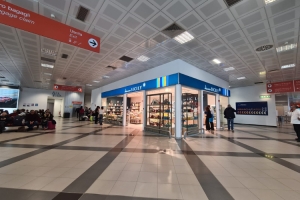
The record was set on the eve of the Christmas holidays, during which Aeroporti di Roma, a Mundys Group company, expects to welcome a further two million travellers from 22 December to 7 January, in addition to the 180,000 expected at Ciampino rome’s second airport. 2025 will therefore close with more than 51 million passengers in total, an increase of more than 4% over 2024, and two million additional transits. The airport serves a network of 240 destinations, and this year 30 new routes were inaugurated to 80 countries around the by a hundred airlines, including six new carriers that chose Fiumicino in 2025. 
Long-haul was one of the main drivers of growth
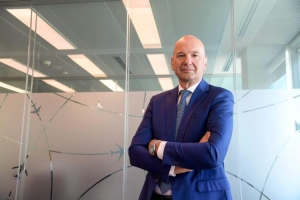
"The 50 million passenger milestone is thanks to operational planning, a long-term industrial vision, consistent investments and the work of a great team of people who contribute to consolidating Rome Fiumicino's position as a global hub, - said Marco Troncone, CEO Aeroporti di Roma. -The numbers confirm the role that this starred airport plays for Italy. This record is a further driver in the implementation of our Sustainable Development Plan, designed to guarantee capacity, resilience and sustainability also in the coming decades.” Long-haul confirmed itself as one of the main drivers of growth with North America maintaining its leadership by closing the year with 4.7 million passengers, with summer peaks of 40 daily departures whil in November and December traffic grew by 20% over 2024 and by more than 75% compared to the pre-Covid period.
Strong demand from Asia as Fiumicino is named “Airport of the Year”
Asian movements increased by 16% in 2025, thanks to strong demand to Korea, Japan and Bangladesh and the return of the Cathay Pacific flight from Hong Kong. The short and medium haul market was driven in particularly by carriers such as Wizz Air and easyJet, whlle the entry of Lufthansa into ITA Airways is destined to further consolidate Leonardo da Vinci's role as a reference hub for Southern Europe. Rome’s Fiumicino airport, confirmed for the eighth consecutive time by ACI World as the best airport in Europe and named “Airport of the Year” at the recent International Airport Summit 2025 in Berlin, is a key infrastructure for Italy's international connectivity.
60 contemporary guestrooms
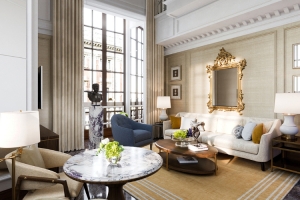
Marking the group's debut in Italy and designed in 1914 by architect Marcello Piacentini, the building has spanned the capital's 20th-century history as an imposing financial headquarters. Acquired by Reuben Brothers in 2019, it now becomes a Corinthia Hotel following a multi-year restoration of its 9,700 sqm on seven levels. Original features such as precious marble, frescoes and carved wood have been preserved and restored, and the interiors by G.A. Design create a style with contemporary and refined details. The hotel has a total of 60 rooms that combine historical charm with contemporary craftsmanship.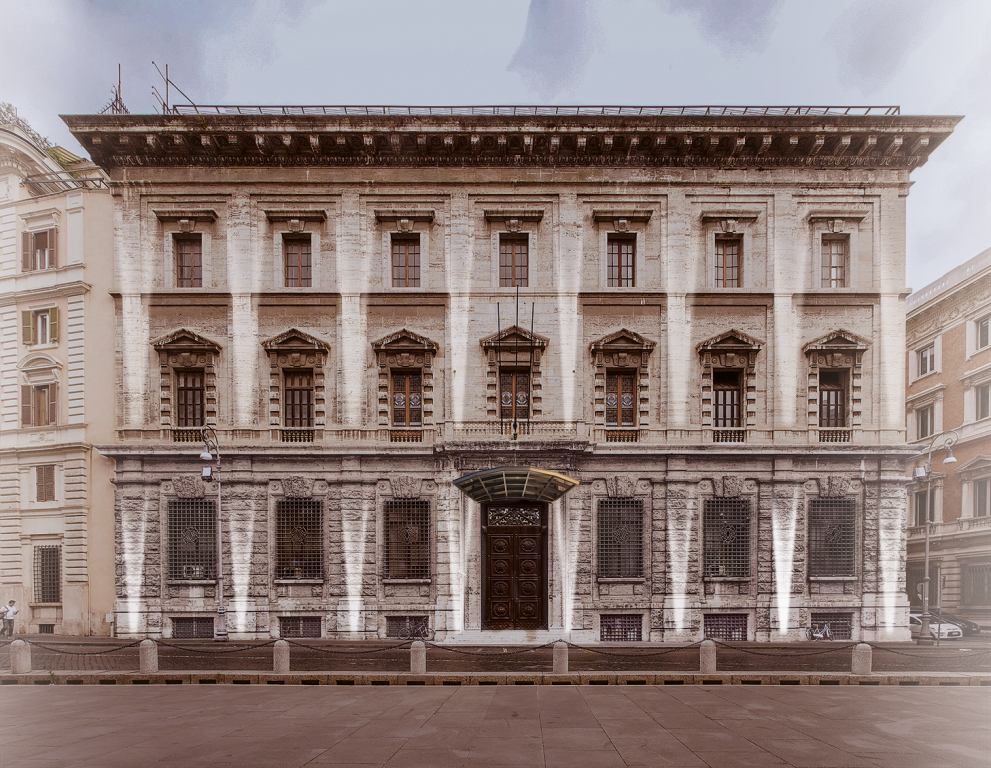
Carlo Cracco’s Rome debut
Corinthia Rome will have 21 suites as well as two restaurants and a bar overlooking an inner courtyard and a spa created from the bank's old vault. This project also marks the arrival of chef Carlo Cracco in Rome, bringing his culinary creativity to the capital for the first time for a collaboration that aims to position the hotel among the new gastronomic excellences in Italy.
“A benchmark for guests and Romans”
The opening is part of the group's global expansion strategy, with recently opened new properties in New York, Brussels and Bucharest. Danilo Zucchetti, managing director of Corinthia Rome, explains: "We look forward to welcoming our guests in the heart of Rome. We are in the centre of a city that is undergoing a remarkable renewal in the hotellerie scene. Our goal is to become a benchmark not only for international guests, but also for Romans, who will find here the art of hospitality in all its forms.
The hotel is right in the centre of Rome
The hotel's location gives guests easy access to the Pantheon, the Spanish Steps and the political centre of Rome. In keeping with the building's original size and architectural style, the 60 rooms and suites are spaciousness with natural light and a perfect balance of restored historical details and contemporary Italian design. Corinthia Rome is commited to celebrating and preserving its cultural heritage, and will offer a selection of original experiences for guests, allowing them to discover new angles of the immense cultural heritage of a city like Rome.
Three weekly Airbus A321neo flights
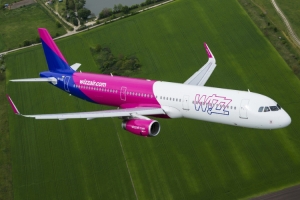
The new flight, active from 30 March 2026, will be operated with an Airbus A321neo aircraft three times weekly on Mondays, Wednesdays and Fridays, offering Calabrian passengers a direct bridge to the Polish capital, and bringing inbound passengers right into Calabria.
Flights from Sofia, Katowice and Budapest
Wizz Air's development plan in Calabria gets this new route in addition to the four flights already operating at the Calabrian airport: from Sofia, with two weekly flights on Tuesdays and Saturdays, starting from 31 March 2026, and from Katowice, with three weekly flights on Tuesdays, Thursdays and Saturdays, the first flight being scheduled for 31 March 2026; and from Bratislava, with two weekly flights on Mondays and Fridays, with the first flight operating from 14 November. Then there are flights from Budapest, again three times weekly on Tuesdays, Thursdays and Saturdays, with the first flight scheduled for 30 April 2026.
“Focusing on affordable fares and quality standards”
The activation of this new route, the result of the excellent relations and constant work of the airline and SACAL - Calabria's airports management company - aims to give a strong boost to inbound tourism to Calabria, opening the region's doors to new flows of visitors from Central and Eastern Europe. Salvatore Gabriele Imperiale, Corporate Communications Manager of Wizz Air, said: "This new Warsaw route joins the flights already announced - and some already operational - from Bratislava, Sofia, Katowice and Budapest, confirming the ambitious growth project we have in Calabria. Italy is our main market and, thanks to our “Customer First Compass” and a €14 billion investment, we continue to improve the travel experience by focusing on affordable fares and quality standards. Lamezia Terme is an important airport where we intend to continue investing and continuing to grow, and our relationship with SACAL facilitates our expansion as well as improving and expanding mobility for our Calabrian passengers."
“Lamezia Terme Airport is a strategic infrastructure”
Marco Franchini, Sacal's Sole Administrator, said: "With the launch of the Warsaw-Lamezia Terme flights, Wizz Air brings to five the number of routes operating from our airport, consolidating a solid and structured growth path. This new route reinforces the role of Lamezia Terme Airport as a strategic infrastructure, increasingly integrated in European networks, capable of attracting new tourist flows, supporting the local economy and enhancing the extraordinary potential of Calabria as a new and credible opportunity on the European stage, both for tourism and business.”
Further investments are on the way
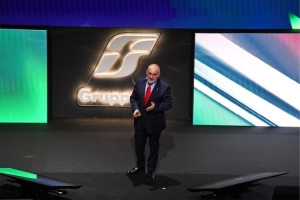
Of these €18 billion some seven billion were for the implementation of the National Recovery and Resilience Plan (PNRR), as highlighted by Stefano Donnarumma, CEO of the FS Group. “These results,’ said the CEO, - are the foundation of the long-term trajectory outlined in the update of the Strategic Plan, which envisages further investments of €177 billion in 2026-2034. Next year we aim to exceed the €18 billion target.”
New infrastructure and modernization of the regional network
In a note, the FS group explained that “the intensity of investments has supported the advancement of the country's main infrastructural works, strengthening of the European corridors, development of the new HS/HC sections, resilience interventions and modernization of the regional network. The increased industrial focus has allowed for more rigorous planning of construction sites, with direct benefits on punctuality and service quality. The PNRR is progressing at a rate of some €7 billion invested over the last 12 months, reaching €18 billion out of the total €25 allocated to the FS group." 2025 was also a turning point in energy management with the creation of FS Energy, the new company dedicated to the group's energy supply and efficiency. “The objective is to reach 19% of the Group's energy consumption covered by renewable sources by 2029 and 40% by 2034.”
Punctuality has improved
With regards to punctuality: “I’m not saying that to increas the punctuality percentage by 10,000 trains is impossible, but it is very difficult. We have done this by cooperating with the group companies on an unprecedented level. The performance of the service has shown significant improvements, with about 3% more punctuality on High Speed, 1% more for Regional trains, and 3% more for Intercity trains, with more than 35,000 trains arriving on schedule in 2025, confirming the effectiveness of the new industrial system.”
Aiming to close 2025 with a positive result
The economic targets set for 2029 of €20 billion in revenues, €3.5 billion in EBITDA and a net result of €500 million, is consistent with the growth trajectory envisaged for the next few years (...) We started with a gap, and then were confirmed. Last year we had to close the budget with a €200 million loss, due to several factors, which we have tried to mitigate with very strong actions, and I believe that we should be able to close 2025 with a positive result.”
Hong Kong-Milan flights three days a week
The Hong Kong-Milan flights will initially operate three times a week - Mondays, Wednesdays and Saturdays - with the aim of achieving a daily frequency in the first half of next year. Hong Kong-Milan is Cathay's third European route to receive the new Business Class cabin, which is also available on daily flights from Hong Kong to London Heathrow and Frankfurt. The refurbished Boeing 777-300Er also offers a new Premium Economy cabin and a revamped Economy cabin.
Cathay Pacific: over 15 years in Italy
“Milan is an important city for Cathay Pacific, which we have been serving for more than 15 years.- Brian Tsoi, general manager Europe, Cathay. -With the introduction of the Aria Suite we offer our passengers even more comfort and a travel experience that sets a new standard. Together with the resumption of our summer flights between Hong Kong and Rome in June 2025, this helps underline the importance of the Italian market for Cathay Pacific, and is an important step in further strengthening connections between Hong Hong, Italy and Europe."
A re-imagined cabin experience
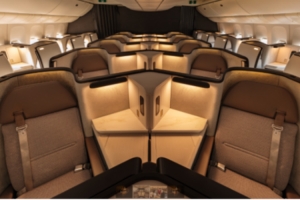
The Aria Suite was officially launched in Hong Kong in October last year and has since been in service on flights to London, Sydney, Melbourne, Vancouver and Frankfurt. From 31 December, the new Business Suite will also be available on selected flights between Hong Kong and San Francisco. The Aria Suite is a completely re-imagined cabin experience, combining unprecedented comfort, human-centred design and carefully thought-out functionality. With an even more customizable on-board experience and elegant finishes, the Aria Suite sets new standards for premium travel.
In collaboration with Michelin-starred restaurants
In the Aria Suite, passengers can customize their space to suit their needs be they for relaxing, working or resting; elements such as suite doors for greater privacy, lighting and wireless charging further enhance the in-flight experience. On long-haul flights from Hong Kong, passengers can enjoy a selection of menus developed in collaboration with Michelin-starred restaurants for an authentic experience of Hong Kong's renowned culinary scene.
In 2026 Aeroporti di Roma will be on a path of growth and innovation: Ivan Bassato's vision.
5 Skytrax stars, and ACI’s Best Airport in Europe
Consolidation, marked growth, especially on the international front, and a drive for innovation, including AI. These are just some of the issues highlighted by Ivan Bassato, chief aviation officer of ADR, who looks at 2025 as a year that has seen Roma Fiumicino “maintain the 5 Skytrax stars and confirm itself for the eighth consecutive year as ACI’s Best Airport in Europe.”
What 2025 was like for Roma Fiumicino?
"2025 was a year of strong consolidation and growth for Fiumicino, which we expect to surpass the 50 million passenger threshold, confirming us as one of Europe’s main hubs. After a record-breaking 2024 - in which we were the airport with the highest growth among the EU's major airports (+21% vs 2023 and +13% vs 2019) - Fiumicino strengthened its network, which now has some 100 carriers, 80 countries served and more than 230 connected destinations. This year Fiumicino saw the opening of over 30 new routes, including 13 new destinations served directly, including Denver, Mauritius and Minneapolis, and Cathay Pacific's return to Hong Kong, as well as six new carriers choosing to operate on Rome. In the first ten months of the year traffic at Fiumicino grew by 4.4% over 2024, and by +17.3% over to pre-Covid levels, with international traffic being the main growth driver. The cargo sector is also giving us great satisfaction, with Fiumicino establishing itself not only as a logistics benchmark for Central Italy, but also as a new strategic cargo hub within the multi-hub development of Lufthansa Cargo.”
"Of course. Innovation is a fundamental strategic element: our goal is to transform Rome’s two airports into a digital, sustainable and efficient smart city. We have launched an industrial conversion, integrating Artificial Intelligence into the services offered to passengers and in operations. This allows us to improve punctuality, efficiency and the quality of the travel experience, positioning Fiumicino and Ciampino as benchmarks for airport innovation. Thanks to Outsight, we monitor passenger flows in real time, preventing congestion and optimizing space. ADR has also launched its conversational assistant to enhance direct interaction with our users. Regarding operations, to ensure high performance and punctuality, we have implemented tools such as Assaia Apron AI, which monitors aircraft turnaround with computer vision and AI, including the Aeroficial Intelligence platform that tracks aircraft movements in the airspace, runways and taxiways. In addition, there are safety solutions such as Argos AI, which automatically detects FOD (Foreign Object Debris) using cameras and deep learning, and thereby reducing operational risks, and we have a new automatic connection system for boarding bridges.”
The main network and carrier innovations for 2026?
“2026 promises to be a year of further expansion, both on long-haul and European networks. Among the main intercontinental novelties, Qantas will almost double its capacity on the Perth-Rome route, extending the operating period and adding frequencies. In the North American market Alaska Airlines will make its debut with new Seattle-Rome flights, while Delta will operate the same route, confirming the growing demand and the role of Rome as a transatlantic gateway. ITA Airways, with its entry into the Lufthansa group, will further strengthen Fiumicino's position as a southern European hub. There is news also on the European front: easyJet will launch flights from Glasgow and Birmingham, Norwegian will fly from Billund, Lot will add Krakow, while Wizz Air will open new routes from Podgorica and Bratislava."
What's new for passengers on international flights?
"In early summer additional baggage reclaim belts were introduced to T3, as well as new e-gates for passport control. The baggage reclaim area in T1 has not only been given three new belts, but has also been extended with areas available for passengers and operators. Also at T1 two new lounges for premium passengers will be opened by Christmas. A new lounge will also be available at Pier E in 2026. Next year we are also planning a reconfiguration and expansion of the arrivals border area in order to welcome passengers in a newer and more comfortable environment. From 2022, there will be a number of Pet Areas at the airport in both the transit and arrivals and departures areas.”
What changes has the adoption of the Entry-Exit System made at the airport?
"The reorganization of flows in the passport control area is a necessary adjustment to the entry into force of the Entry-Exit System (EES). On 12 October the EES was activated at Roma Fiumicino in advance, with redesigned layouts and flow management methods to allow the acquisition of the biometric and documentary data required by the regulations. We have made 71 EES self-service kiosks operational out of the nearly 200 that ADR installed over three years ago. These are for passengers of non-Schengen nationality in possession of biometric passports and over 12 years of age, the aim being to support the registration process and progressively facilitate the adaptation to the new procedure.”
“We cannot go ahead with public funding alone”
The investment will go into expanding the passenger terminal, commercial areas and services, completing the digitalization of Saf-ready and privatizing its management company Gesap. This road map, as reported by the Italian daily Il Sole 24 Ore, echoes Gesap's managing director, Gianfranco Battisti who said: Capitalization is necessary, we cannot go ahead with public funding alone.” 
Strengthening relations with North Africa and the Middle East
The airport's future is clearly outlined: “Palermo will no longer be a transit airport. We are working on an ambitious industrial plan, built on concrete, sustainable foundations and open to partnerships. In a world where geography counts again, choosing Palermo means investing in a project with deep roots and above all solid prospects.” Battisti underlines that the aim is to connect Palermo to the major global hubs, recalling that today the airport boasts direct connections to cities such as New York, Istanbul, Paris, London, Madrid and Vienna. The intention is to strengthen relations with North Africa and the Middle East which are considered expanding markets. The goal is to activate between seven and nine new intercontinental routes by 2030.
Falcone-Borsellino Airport: 45 routes operated by 14 airlines
This winter the airport has 45 routes, 14 airlines and connections to 13 countries: the two main novelties of the season are the new international routes from Warsaw and Bratislava, operated by Ryanair and Wizz Air. Between November 2025 and March 2026 the airport will have over 19,500 aircraft movements, 4% more than last year, while available seats will exceed 3.4 million, an increase of 8%.
“We…want to be intercontinental, dynamic, connected and future-oriented”
This year will close with around "9.2 million passengers and a load factor of 87.4% (...) But the most significant figure is the structural and organizational transformation that we are moving ahead, especially for international traffic, which has exceeded 34% of the total. Palermo no longer wants to be a regional airport, but an intercontinental, dynamic, connected and future-oriented platform.”
A retreat set in Mediterranean gardens
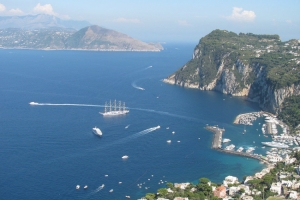
A new luxury boutique villa will join Capri's hotel scene in April 2026 with the opening of Casa Caprile, a restored 19th-century residence in Anacapri. With 10,000 sqm of Mediterranean gardens, the property is a retreat away from the crowded tourist areas of Capri, and remains deeply rooted in the island's cultural heritage.
A second home for guests seeking tranquility and privacy
Casa Caprile, as TravelDailyNews reports, occupies part of the former royal residence of Queen Victoria of Sweden in Anacapri and has been reimagined as a second home for guests seeking tranquillity and privacy. The project is led by Gabriella Russo, known for her long involvement with JK Place Capri. Reflecting on the vision that guided the redesign, Russo said: "This project is deeply connected to Anacapri and its cultural heritage. Located off the beaten track, Casa Caprile aims to welcome travellers looking for more than luxury accommodation. It wants to be a home where guests can retreat to spacious gardens, and with meticulous attention to detail".
Select suites with small private pools
Spread over two floors, the villa has 12 individually designed rooms, ranging from cozy spaces with village views to sea-facing rooms, junior suites with private terraces and select suites with small private pools. Architect Antonio Girardi oversaw the restoration, blending contemporary sophistication with the historic character of the property. The interiors feature contrasting ivory tones with red accents, selected woods, terracotta tiles, hand-painted plaster and customized brass and ceramic lighting, while fabrics by Pierre Frey and Schumacher add texture and sophistication.
Neapolitan and Capri-inspired menus
At the centre of the estate the large outdoor swimming pool is surrounded by greenery and uses a magnesium purification system, which is a gentle alternative to chlorine. It is heated year-round and cooled in the warmer months. The main living room, which opens directly onto the gardens, is a relaxing convivial space. Casa Caprile's restaurant is immersed in the tranquillity of the gardens and embraces a “producer to consumer” philosophy inspired by Neapolitan and Capri traditions. The chef creates customized dinners by asking guests each day what they would like to eat, based on fresh, seasonal ingredients. The menu caters for a wide range of dietary needs, including gluten-free and multigrain options. The CC Bar, located in the heart of the gardens, offers cocktails, herbal teas and quiet moments.
“The real Dolce Vita” in Anacapri
To enhance guests' experience, Casa Caprile will offer guided trekking tours to discover Anacapri's natural and historic landscapes; sightseeing experiences among Capri's cultural attractions; and private transfers to and from Naples International Airport. Initially opened as a seasonal residence, Casa Caprile aims to remain open all year round. Russo adds: “I am originally from Anacapri and I can't wait to open the doors of Casa Caprile and offer our guests the opportunity to discover the real Dolce Vita, not only in the summer but especially out of season, when true lovers of Capri come to stay.”
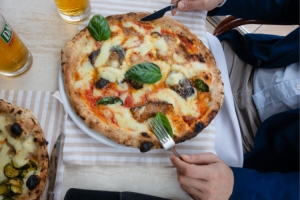
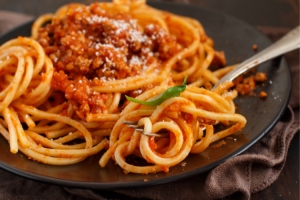
In the TasteAtlas “Best Food Cities in the World” category Naples triumphs with a dazzling 4.99 score, officially crowned as the planet’s tastiest urban destination. Hardly a surprise in the homeland of pizza, sfogliatella and street food elevated to an art form. A score it shares with Milan whose elegant culinary evolution has taken it far beyond the aperitivo stereotype. And third we find Bologna (4.98), which quite simply makes the world’s best ragù.
Italy’s dominance continues in “Best Food Regions in the World.” Campania takes gold with a score of 4.47 for its sun-soaked produce and traditions that inspires dishes from pasta allo scarpariello to mozzarella di bufala. Emilia-Romagna follows closely (4.45) with Parmigiano Reggiano, and cured meats like the inimitable Parma Ham. And Rome? The Eternal City slides into a surprising ninth place, below Mumbai, Paris and Vienna. Romans will shrug, and the debate between cab drivers, grandmothers and half the city’s chef-restaurateurs will be a fiery one.
However, the list from TasteAtlas, the global online culinary guide, echoes a broader truth as affirmed by UNESCO: Italian cuisine is more than food, it is technique, territory, seasonality, community, memory, and an intrinsic part of daily life.
 Pamela McCourt Francescone
Executive Editor
In Italy food is a great art
This is an award not for chefs in white hats, but for the everyday magic that happens in Italian homes, where food is prepared, cooked and regarded with the devotion usually reserved for great art. Because in Italy, of course, cooking is a great art. Italian cuisine is not defined by a single flavour profile, cooking method or set of ingredients. Instead, it is a philosophy: take what the land offers, respect it, prepare it with care, and share it generously that UNESCO has honoured.
A chorus of fiercely regional voices
What makes the UNESCO accolade unique is that it celebrates the staggering diversity of dishes found in twenty regions that often agree only on one thing: that theirs is the “real” Italian cuisine. The ingredients may differ, the techniques may vary, and even the mealtimes shift slightly, but the values remain constant. From the arancini made in Sicilian kitchens to the pots of polenta slowly stirred in Alpine valleys; from Roman debates on the true carbonara to Liguria’s proud guardianship of pesto, Italy’s culinary identity is not one tradition, but a chorus of fiercely regional voices singing in perfect harmony.
The world still eats best when it eats Italian
UNESCO has recognized this daily ritual of cooking as a cultural treasure: the gestures passed down from generation to generation, the loyalty to seasonal ingredients, the stirring, kneading and rolling that turn simple products into dishes fit for a king. In an age when meals are squeezed between appointments, Italy still insists on gathering around the table, as if every day was a holiday to be celebrated with family and friends. The UNESCO recognition doesn’t just mean Italy has added another medal to the shelf, it says the world still eats best when it eats Italian.



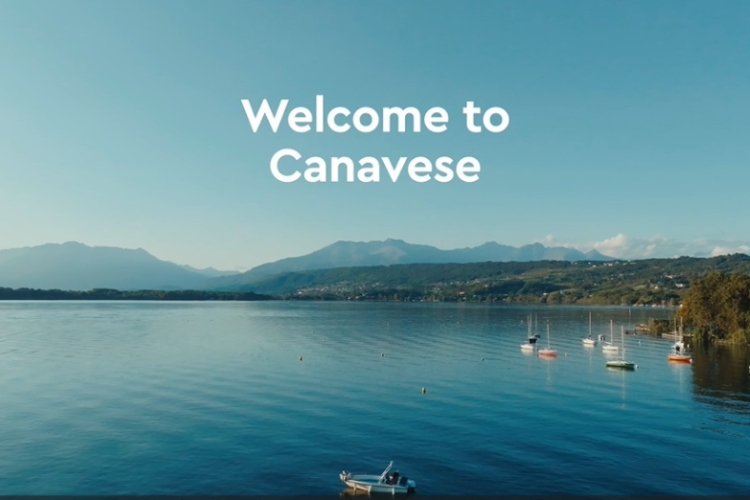
Welcome to Canavese, an unexpected corner of Piedmont where …
259Welcome to Canavese, an unexpected corner of Piedmont where …
259