


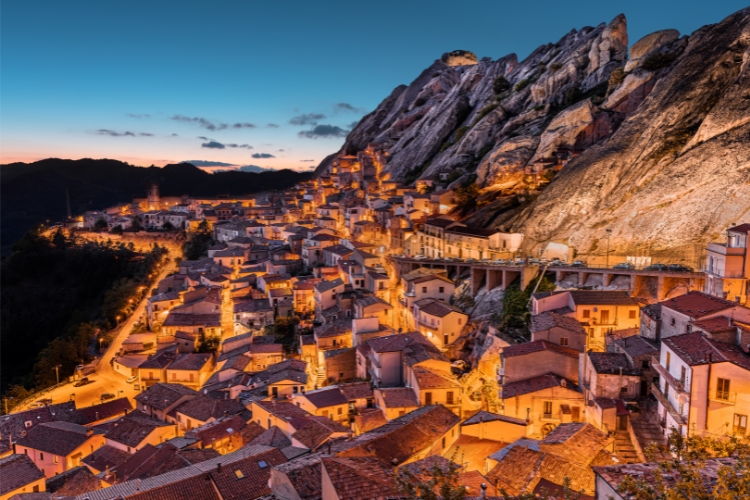
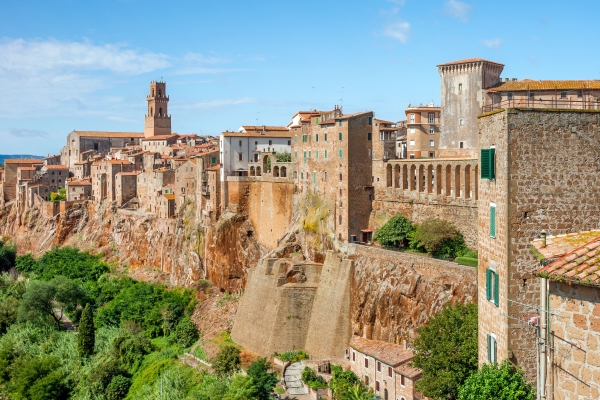



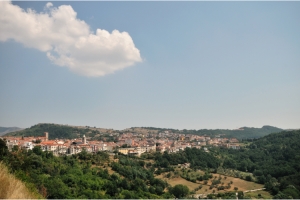


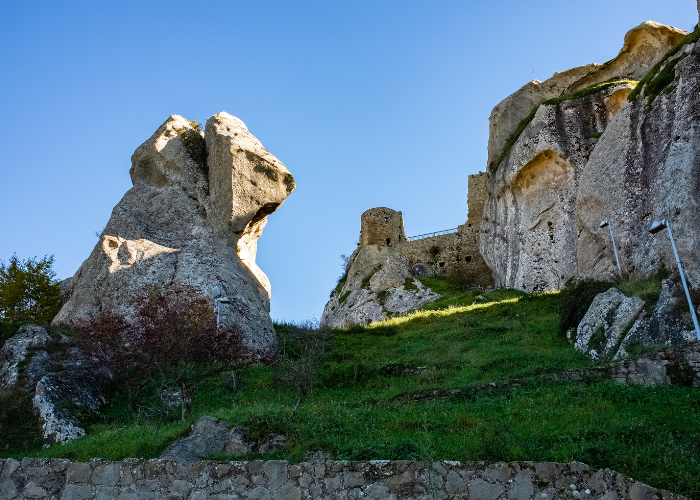
Being the highest town in Basilicata, ancient Pietrapertosa is truly spectacular and takes its name from Pietraperciata which means pierced stone, a name given for the presence of a hole in a large cliff that is visible from the city.
An ancient military fortress
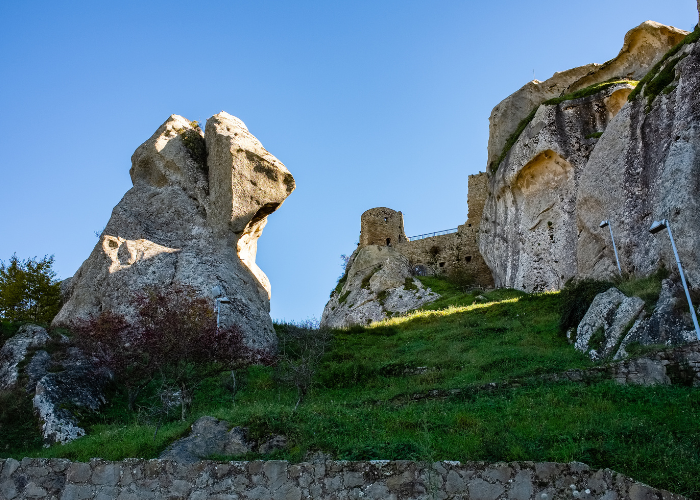
At the highest point of Pietrapertosa stands the 10th-century Norman-Swabian Castle which is difficult to identify from afar as it is literally carved into the mountain. From the castle you can see a vast landscape with a long stretch of valley, which is why it has always had an important military sighting function. The fort was first used by the Saracens and later became a Norman-Swabian stronghold. Abandoned in the 17th century, it has recently been refurbished.
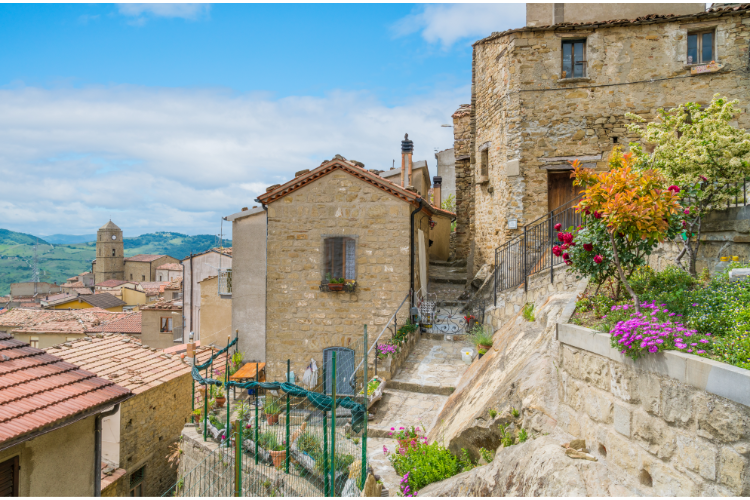
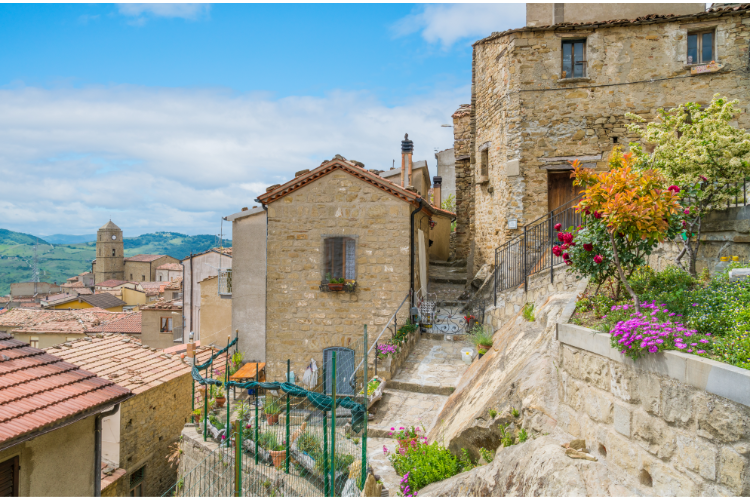
The old Arab district
In the historic centre of Pietrapertosa the 13th-century Chiesa Madre church has important pictorial works such as The Beheading of the Baptist. Not far from the centre the Convent of Saint Francis has the painting The Apparition of the Child to Saint Anthony of Padua by Giovanni De Gregorio (known as Pietrafesa) and there are numerous frescoes by Giovanni Luce. Don’t miss taking a tour of the Arabata district, the oldest in the area. It’s name derives from the Arabs who dominated the area for about fifty years.
A skeleton dating back 35,000 years
In the 1960s Pietrapertosa was at the centre of a mysterious story, as in 1964 a human skeleton together with rudimentary objects and some furnishings was found in an ancient cave in Piano Avena. Investigations began and experts from the Pigorini Museum of Prehistory and Ethnography in Rome found the skeleton dated back to 35 thousand years ago, and belonged to a man who was attacked while he was eating with his partner in his house. The skeleton is currently on display in Rome while the remains of the woman are believed to be still in the cave.