





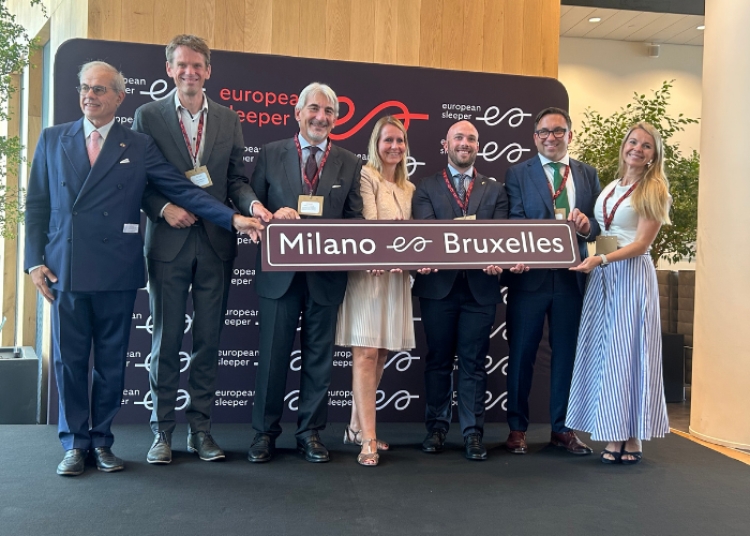
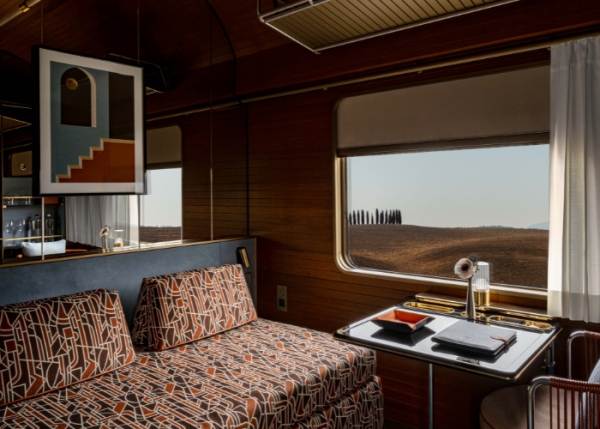





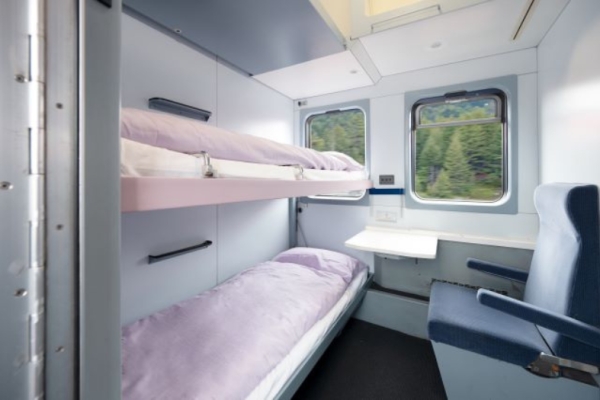
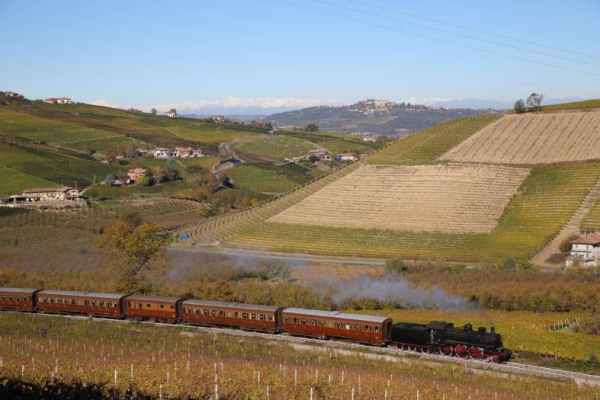






The European Sleeper made its official debut on 9 September, effectively taking on the low-cost carriers.
Three weekly departures and then the Netherlands
The new night service linking Milan's Porta Garibaldi station with Brussels operates three departures a week, on Wednesdays, Fridays and Sundays. A journey with no changes which, from 14 December, with the start of the winter timetable, will be extended to Breda and Eindhoven in the Netherlands.
The train passes through Switzerland and Germany
“We are launching a new train, but above all we are opening up new opportunities, new connections and new encounters. From today, Milan and Brussels are closer,” said one of the two co-founders, Elmer van Buuren, noting that the train, which, on the Italian section of the route, will rely on the services of Arenaways for traction, passes through Ticino and Aarau in central Switzerland before continuing on to Cologne and finally Brussels.
A long process involving four countries
“It wasn’t easy to integrate this train into one of Europe’s busiest rail hubs, but we managed it thanks to RFI” and to the “long process of coordination with the rail infrastructure managers of four countries, and it is an important step in the growth of the European night train network,” added the other co-founder, Chris Engelsman. “What we always try to do is combine different routes into a single train to ensure sufficient demand. In this case, you can travel to Germany (where, from Cologne, you might be able to reach Hamburg or Berlin by other means), the Netherlands and Belgium on a single train, but you can also travel to Switzerland from the Benelux countries and Germany, and of course all the way here to Milan. We always create this sort of combination, and I think it will be very successful in this instance too.”
A train of up to 14 carriages
A positive outcome that the Belgian-Dutch company (founded in 2021 and operational since 2023) hopes will become “a lasting commercial success...where costs must be fully covered by revenue”. This is where the use of a single locomotive from Brussels to Milan comes in, thereby avoiding a locomotive changeover at Chiasso and saving both costs and precious time. And the length of the train, which can be extended from 10 to 13 or even 14 carriages, will also allow us to increase revenue and meet peaks in demand during the high season.”
The challenge to short-haul air travel
Engelsman adds: “We offer overnight journeys to passengers crossing borders as they sleep, ensuring they have a pleasant and efficient journey. It’s no easy task to set up a company like this, and we’ve done it from scratch. There are certainly many challenges to face, and we’re becoming a major player in the European rail landscape. But I think that, in a sense, we have also achieved more, have done something different. We have a mission which is to make train travel, which is a sustainable mode of transport, more attractive. We want to replace short-haul flights with trains, offering a pleasant, unhurried travel option. We’re already replacing many short-haul flights with our trains and we’re continuing this way." For the current year, European Sleeper is targeting “total revenue of around €25 million, which is positive,” notes Engelsman. “We expect to carry some 200,000 passengers.”
"Bringing Lombardy even closer to the...heart of Europe"
Also present at the presentation was Raffaele Cattaneo, under-secretary to the president of the Lombardy Region with responsibility for international and European relations: “With the new Milan–Brussels overnight rail link, which joins those already operating to the Belgian capital, an important step is being taken to bring Lombardy even closer to the geographical and political heart of Europe. This is not merely a strategic service, but also yet another demonstration of how fully our region is involved in the process of European integration.”